
Data dispatch, for the week ending April 25, 2026
Six hours in RegulationLand.

It came in the sweet spot for a Friday evening news dump.
My phone pinged with news alerts while stuck in Madison commuter traffic, as I drove away from the air-conditioned, document-heavy Hill Farms State Office Facility. This is the world of RegulationLand.
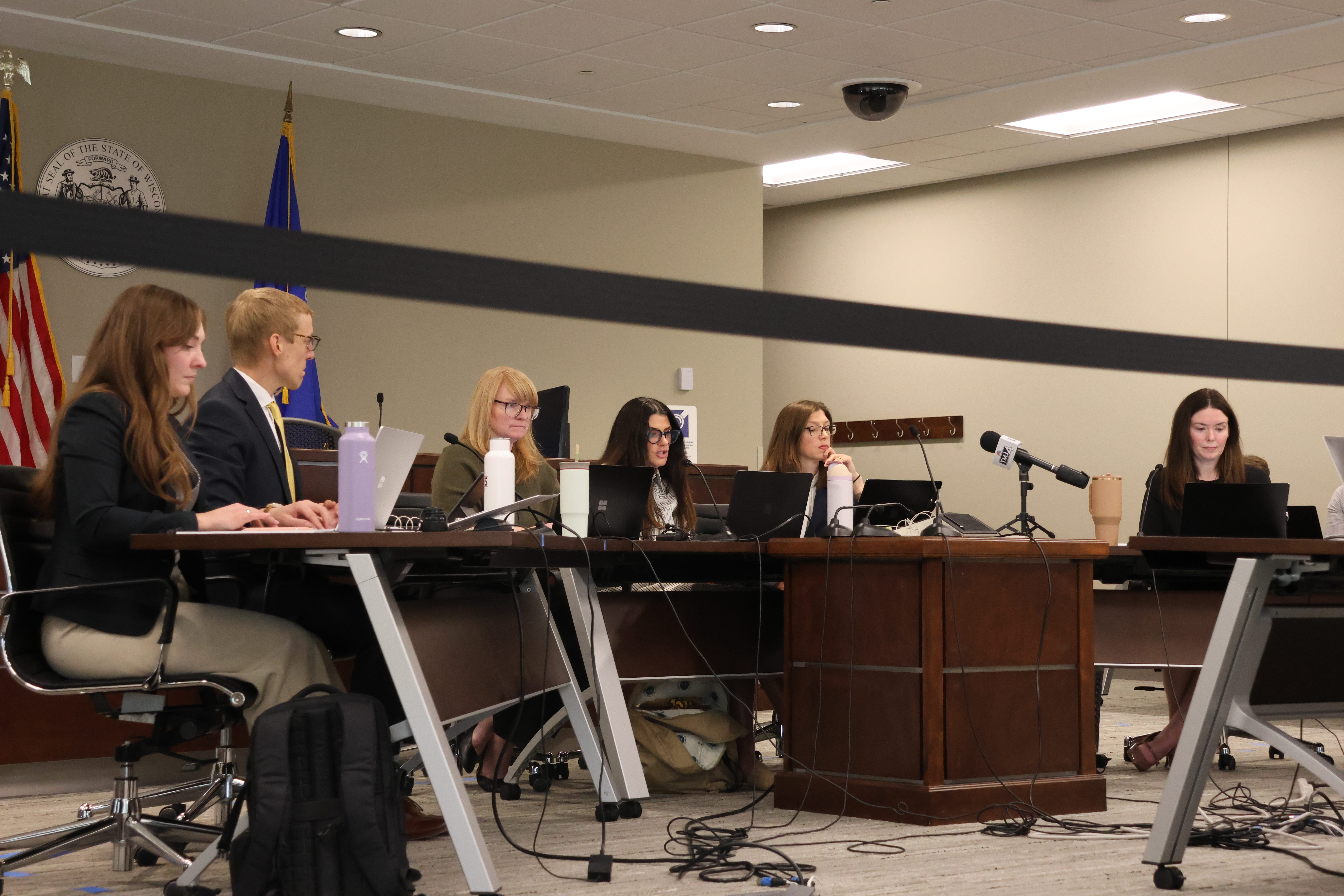
The three-member Public Service Commission had just wrapped up a case to serve “very large customers,” spending six hours discussing answers to 28 questions that were, they said, “unprecedented.” Their last vote: 4:44pm. They’d started at 10:30 am, but taken a generous lunch.
The decision sets the stage for utilities seeking to power hyperscale data centers, creating a new class of very large customers (VLCs are how we describe large data centers) and the infrastructure designed to serve those customers (bespoke resources). It puts tariffs on both those VLCs and bespoke resources.
The case, Commissioners said, was far from routine. Instead, it “has the potential to fundamentally reshape the utility system, its planning and long-term investment decisions, and affect our state as a whole,” said Commissioner Kristy Nieto.
The application was filed more than a year ago by We Energies, Wisconsin’s largest utility, which is powering the Vantage/Stargate data campus in Port Washington and the Microsoft project in Mount Pleasant and beyond.
The case received an eye-watering amount of public comment, along with formal intervenors. No wonder. The plan, added Nieto, “amounts to the equivalent of putting around half or more of another We Energies right in southeastern Wisconsin in the coming five years.”
News outlets have already rounded up the commission’s main decisions: they lowered the energy threshold for when special rates kick in, lengthened the tariff length, and created reporting requirements along with additional opportunities to make adjustments.
The PSC required data centers to pay the full costs of building the infrastructure to power them, rejecting another model where all ratepayers are on the hook for a quarter of the build-out. They included provisions to protect customers and prevent stranded assets if the project ends early, something that “does not exist for any other type of customer.”
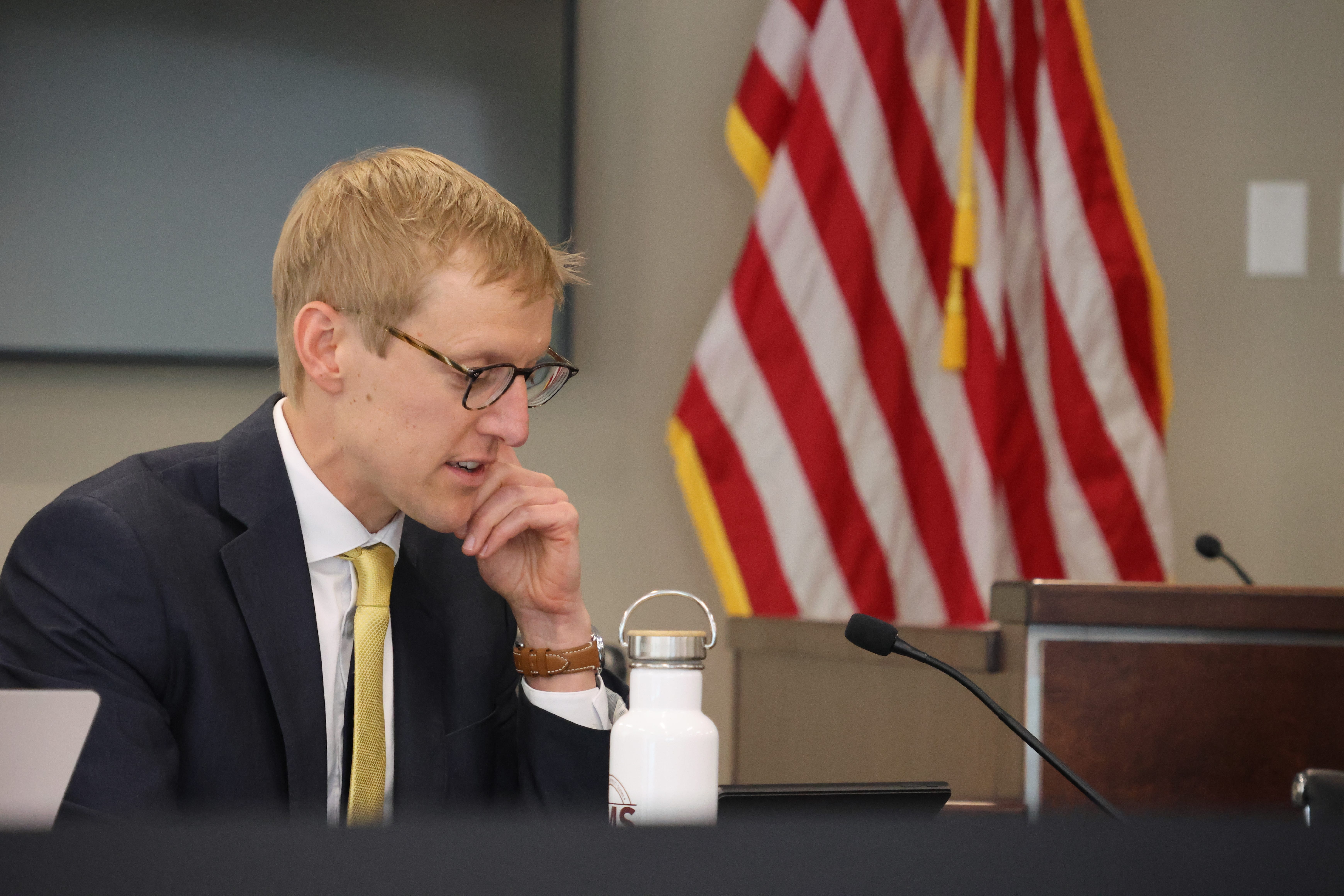
There’s much more. The docket is “one of the most complicated, complex documents this commission has ever seen,” said Commissioner Hawkins. And I think it’s fair to say that the PSC made decisions to hold data centers and utilities accountable. But there are aspects — primarily in transmission costs — that test the limits of state regulators’ authority; where being more aggressive could put them on their own “edge of precedent.”
Those finer points — and figuring out what this decision means for other utilities seeking to power large data centers— are questions I’m spending a little more time to brew on.
In the meantime, here’s the case covered elsewhere:
Milwaukee Journal Sentinel: Regulators modify, and then approve We Energies’ new electric rate for data centers
WPR: State regulators change We Energies’ data center rate proposal to protect customers
WisPolitics: PSC ruling requires data centers to cover costs of new We Energies power generation
Wisconsin Watch: Wisconsin regulators: Data centers must cover full cost of their energy needs
TMJ4: PSC sides with We Energies: Data centers should pay for their own energy costs
Dig in yourself: PSC’s docket, hearing video, and press statement
News in brief
💰 Theyaddeditup
Tax breaks for large data centers, included in the state’s 2023 budget, mean that Wisconsin’s “poised to forgo more than $2 billion in sales tax revenue to subsidize hyperscale data centers,” according to new reporting from Wisconsin Watch.
It’s based on fiscal projections prepared by the Legislative Fiscal Bureau, at the request of state Sen. State Sen. Jodi Habush Sinykin, a Democrat from Whitefish Bay whose district includes Port Washington and who introduced data center legislation last year.
The LFB memo estimates that for every $1 billion in project costs, the state loses $40 million in sales tax revenue in initial construction, and another $10 million each year in operating costs. Critics of this framing, though, say data centers might not be here at all without the tax breaks.
⚖️ Speaking of those incentives
The National Conference on State Legislatures has been tracking which states offer dedicated tax incentives for data centers. 38 states currently have some kind of incentive for data centers.
Now the NCSL is tracking the flip side: moratoriums, which have been proposed in fourteen states. Wisconsin’s failed bill didn’t get very far in the process. Maine's was approved by the state’s legislature this month.
🦞 Moratorium fails in Maine
Speaking of: on the final night of their session last week, Maine’s Democratic-led legislature became the first in the nation to approve a temporary moratorium on data centers.
The moratorium would have paused data center applications with loads of 20 megawatts or more until November 2027. It also would’ve tasked a new council on data centers to develop regulatory recommendations.
Maine Governor Janet Mills, a Democrat who is running to unseat Susan Collins in Congress, waited almost until the last possible day to take action on the bill. Mills vetoed it on Saturday to allow the advancement of a single data center in the town of Jay, at the site of the Androscoggin Mill. which shut down in 2023 following an explosion.
“I know well how critical the mill was to generations of working families, and how important it is – and how challenging it has been – to promote reinvestment and job-creation at the former mill which is a brownfield site. After prior redevelopment efforts failed, the Town of Jay worked for two years on a $550 million data center redevelopment project to finally bring jobs and investment back to the mill site,” Mills said in her veto message.
Rep. Melanie Sachs, a state lawmaker who sponsored the legislation and also chairs the state’s energy committee, spoke with Democracy Now prior to the veto. Sachs grew up next to the town of Jay, and her father worked at the now-shuttered mill.
Sachs says they have too little information on the design and impact of the one million sq. ft data center, which is being proposed by NYC-based Sentinel Data Centers.
“These projects are more than just the locality where they are located. These projects impact the grid, electricity rates, utility rates, water usage, for the entire community and sometimes statewide,” said Sachs, countering the description of the data center as small.
“The projected load that we’ve been able to get out of the developer actually could be 10% of Maine’s entire load for this one data center. So we need to make sure we meet the moment.”
📍 Janesville hosts data center town hall
Back in Wisconsin, at another data center proposed at a brownfield site: Janesville turned out on Tuesday at a town hall featuring some familiar faces leading statewide opposition to data centers.
It was hosted by Rock County Neighbors for Responsible Development and held at Blackhawk Technical College, practically around the corner from a data center being eyed in the Town of Beloit (Beloit Daily News, Gazette Extra, NBC 15) .
🤑 Paul Ryan joins board of military AI startup(s)
Janesville’s own Paul Ryan is getting into the military AI game. The former congressman and house speaker has joined the strategic advisory board for defense tech startup EdgeRunner AI, reports Politico (paywalled).
Leading the board is another Janesville native: Andrew Poppas, former 4-Star Commanding General of U.S. Army Forces Command (FORSCOM), Director of the Joint Staff, and Commanding General of the 101st Airborne Division (Air Assault). EdgeRunner AI aims to “help military personnel make decisions in the field,” reports GeekWire.
Earlier this month, Ryan was also named to the advisory board of a second AI startup: HawkEye 360, which says it’s “equipping defense, intelligence, and national security leaders with mission-critical signals intelligence to enable faster, better decision-making.”
📍 Wisconsin Rapids eyes proposals for natural gas; data center
The Wisconsin Rapids Plan Commission will hold public hearings on two proposals in early May. One’s a conditional use permit from We Energies for what appears to be a natural gas plant. The second’s a conditional use permit for a data center, from PCH WI Holdings LLC, a company formed in January. Last week, the city council approved new zoning definitions for data centers.
😷 DNR backup diesel generator review for AI data center sparks criticism
The Journal Sentinel follows up on air quality permits in Port Washington, which had a DNR public hearing earlier this month. Vantage wants to install 45 diesel generators to ensure power supply in an emergency. An engineering firm hired by the Midwest Environmental Advocates to model the air quality impact finds it would violate federal air quality standards.
⚖️ The absolute edge of precedent
Federal energy regulators want to have a plan to accelerate energy infrastructure by June, in order to support the build-out of AI data centers, reports Politico. FERC Chair Laura Swett says she has an “appetite to push right up to that edge [of precedent” in order to do it. The plan has the potential to challenge the jurisdiction of state regulators.
💨 Emissions from gas-powered data centers to outpace nations
WIRED surveys air quality permits for natural gas plants powering data centers, and finds that combined, they could be emitting more greenhouse gases than entire nations each year.
There’s a caveat — permitted emissions numbers are not actual emissions. But even more conservative estimates put data center emissions ahead of smaller countries like Norway.
It’s here too that we encounter another piece of terminology: “behind-the-meter.” Those are power generators built by the customer (in this case, it’s largely natural gas plants, built for AI companies).
Events in brief
Monday, April 27: Brownfield basics (Janesville, 5:15pm). The last in a series of data center workshops. More information here.
Wednesday, April 29: Community info event on data centers. South Wood County Neighbors for Responsible Development and Great Lakes Neighbors United will host a community event on data centers at the Wisconsin Rapids Area Middle School. It’ll feature familiar voices: comedian Charlie Berens, Prescott Balch, Dr. Brittnay Keyes, Erin Lenninger, and Amanda Mueller. It’s MC’d by a great former colleague: Aliya Khan, host of a new community podcast: Sun Up, Wisconsin! More info here. [UPDATED TO INCLUDE EVENT]
Thursday, April 30: Wisconsin Tech Summit (Oshkosh Corp. headquarters, $$). This year’s annual summit is focused on AI in industry, especially in health care, finance, ag, energy, and manufacturing. Remzi Arpaci-Dusseau, of UW-Madison’s new College of Computing and Artificial Intelligence, will deliver a keynote. Full speaker list here, and more info.
Tuesday, May 5: The 5 Lakes Institute, which emphasizes “accelerating the pace of technological innovation and entrepreneurship across the Great Lakes Region,” will host an all-day summit on nuclear fusion energy at the UW-Madison Discovery Building. It’s followed by a mixer to “rub elbows with major fusion industry players.”
That’s all for now!
This weekly newsletter is attempting to do something a little different: round up the data center news across Wisconsin, and present the patterns that emerge.
I’m starting this out of a personal habit of aggregating developments and data center news, and a way to organize notes for longer research projects. Then I figured, why not share the notes with you?